
Sustainable Longboards: Bamboo, Recycled Materials, and Eco-Friendly Brands
Introduction: Riding Toward a Greener Future
Picture this: you’re carving down a coastal path, wind in your hair, the rhythmic hum of wheels on pavement beneath your feet. You’re not just cruising—you’re making a statement. Every push forward is a small act of rebellion against disposable culture, a choice to embrace sustainability without sacrificing performance or style. Welcome to the world of eco-friendly longboarding, where innovation meets environmental responsibility, and brands like DonkBoard are leading the charge toward a more sustainable riding experience.
The skateboarding and longboarding community has always been about freedom, creativity, and pushing boundaries. Today, that spirit extends beyond tricks and downhill runs—it’s about protecting the planet we ride on. With climate change at the forefront of global conversations, riders everywhere are asking: “Can I enjoy my passion while minimizing my ecological footprint?” The answer is a resounding yes, and it starts with choosing sustainable longboards crafted from bamboo, recycled materials, and eco-conscious manufacturing processes.
In this comprehensive guide, we’ll explore everything you need to know about sustainable longboards, from revolutionary bamboo longboard designs to the different kinds of skateboard wheels that balance performance with environmental responsibility. Whether you’re searching for the best longboard for beginners or you’re a seasoned rider looking to upgrade to an eco-friendly setup, this article will equip you with the knowledge to make informed, planet-conscious decisions.
Why Sustainable Longboards Matter
The Environmental Impact of Traditional Manufacturing
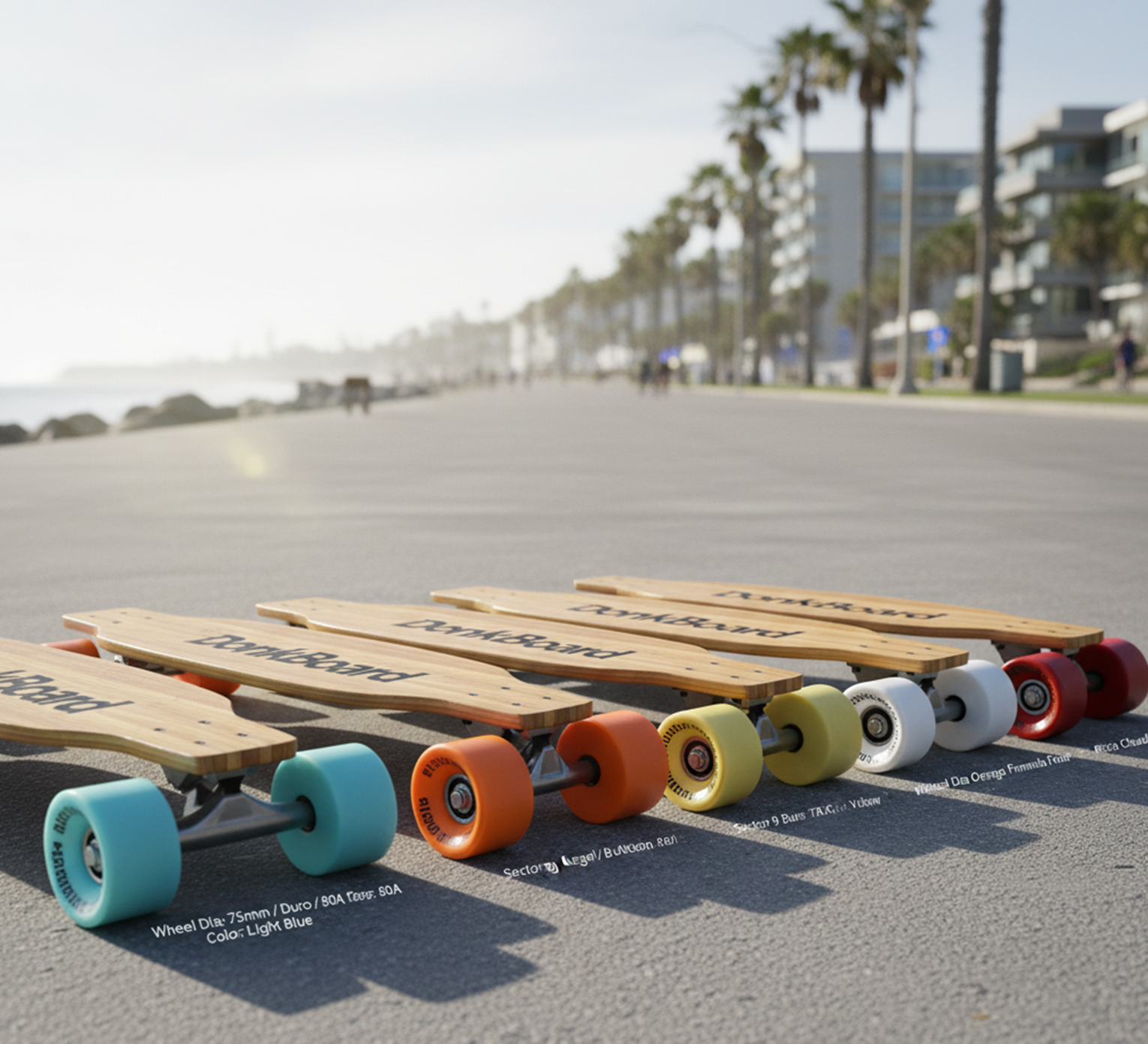
Traditional skateboard and longboard manufacturing has historically relied on materials and processes that take a significant toll on our environment. Conventional decks are typically made from Canadian maple, which requires harvesting old-growth forests. The adhesives used in laminating these decks often contain formaldehyde and other volatile organic compounds (VOCs) that release harmful chemicals into the atmosphere.
Beyond the deck, the production of wheels, bearings, and hardware involves petroleum-based plastics, metal mining, and energy-intensive manufacturing. When you factor in global shipping, packaging waste, and eventual disposal of worn-out boards, the environmental footprint of a single longboard can be surprisingly substantial.
The Benefits of Going Eco-Friendly
Sustainable longboards offer several compelling advantages that extend far beyond environmental benefits:
Environmental Impact: By using renewable materials like bamboo, recycled plastics, and eco-friendly resins, sustainable boards significantly reduce carbon emissions, deforestation, and waste. Bamboo grows up to three feet per day and reaches maturity in just 3-5 years, compared to the decades required for maple trees.
Performance Advantages: Eco-friendly materials often enhance performance. Bamboo longboards offer exceptional flex characteristics, natural vibration dampening, and a strength-to-weight ratio that rivals or exceeds traditional maple. This makes them ideal for everything from cruising to downhill riding.
Durability and Longevity: Quality sustainable boards are built to last. The natural properties of bamboo—its flexibility and resilience—mean your deck is less likely to snap or develop pressure cracks, extending the life of your board and reducing replacement needs.
Supporting Ethical Brands: When you invest in a sustainable longboard from companies like DonkBoard that prioritize environmental stewardship, you’re supporting businesses committed to fair labor practices, responsible sourcing, and giving back to environmental causes.
Understanding Bamboo Longboards: The Gold Standard
What Makes Bamboo Revolutionary?
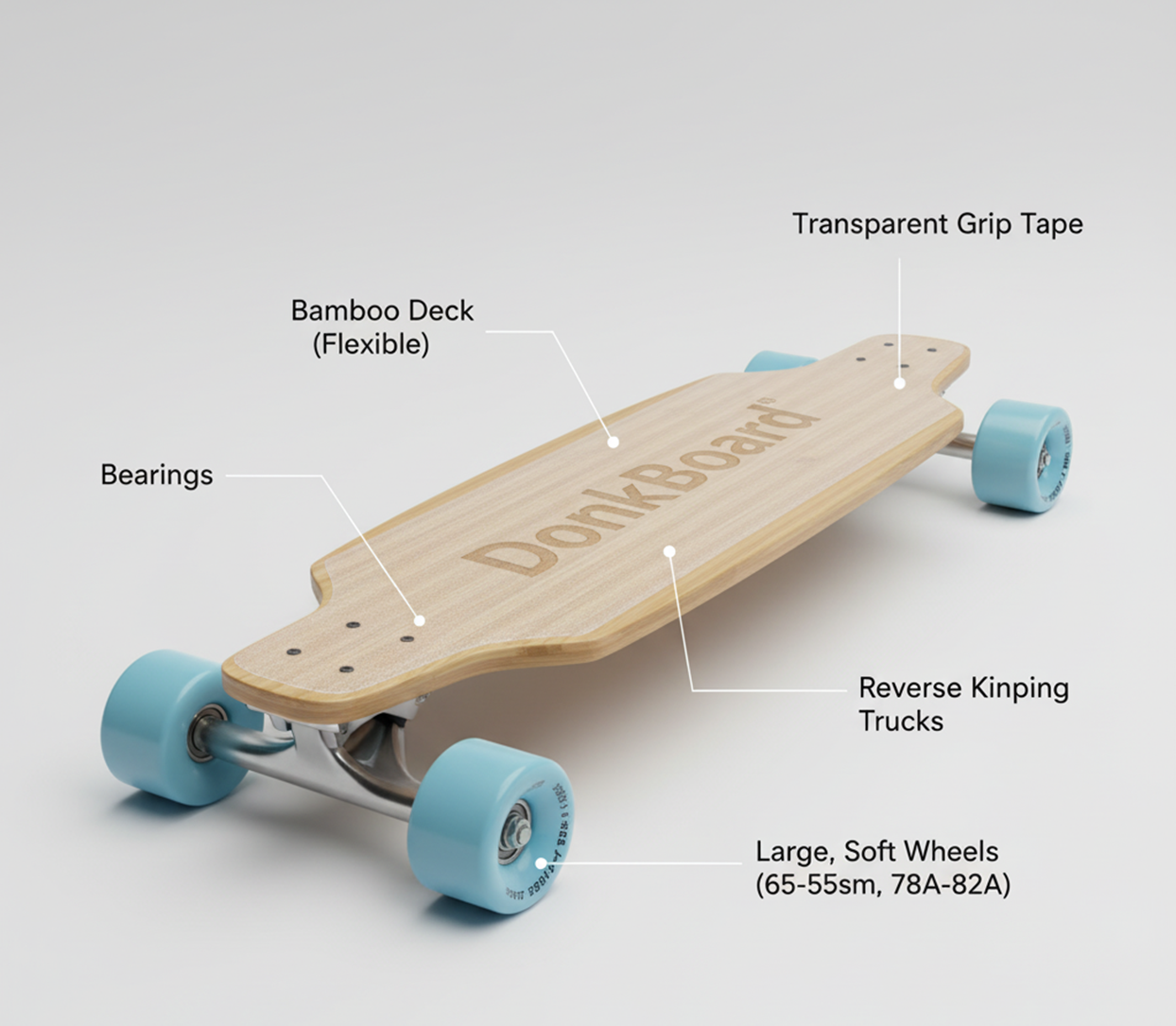
When discussing sustainable longboards, bamboo inevitably takes center stage. This remarkable grass possesses characteristics that make it uniquely suited for skateboard deck construction.
Rapid Renewability: Bamboo is one of the fastest-growing plants on Earth. Some species can grow up to 36 inches in a single day, reaching full maturity in just three to five years. Compare this to the 30-50 years required for maple trees, and the sustainability advantage becomes crystal clear.
Exceptional Strength: Pound for pound, bamboo has a higher tensile strength than steel and greater compressive strength than concrete. This incredible durability translates to longboard decks that withstand serious abuse while maintaining structural integrity season after season.
Natural Flexibility: The bamboo longboard offers ride quality that’s distinctly different from traditional maple. Bamboo’s natural flex provides excellent shock absorption, creating a smoother ride over rough pavement while maintaining responsiveness for carving and technical maneuvers.
Lightweight Construction: Bamboo’s impressive strength-to-weight ratio means you achieve the same structural integrity with less material. This results in lighter boards that are easier to carry, more agile in motion, and less fatiguing for commuters and long-distance riders.
Bamboo vs. Traditional Maple
Riders considering a bamboo longboard often wonder how it compares to traditional seven-ply maple decks. Each material has strengths, and the best choice depends on your riding style.
Flex and Ride Feel: Bamboo decks typically offer more flex than maple, creating a lively, responsive ride that excels in cruising and carving. This flex acts as natural suspension, absorbing vibrations and providing comfort on longer rides. Maple decks tend to be stiffer, offering more stability at high speeds.
Weight: Bamboo longboards are generally lighter than maple counterparts, making them ideal for commuters who carry their boards frequently. However, some downhill riders prefer maple’s added weight for increased stability when bombing hills.
Durability: Both materials are remarkably durable when properly constructed. Maple decks can develop razor-tail and pressure cracks over time, while bamboo decks are more likely to experience delamination if exposed to excessive moisture. Quality construction with water-resistant glues mitigates this concern.
Sustainability: Bamboo wins decisively. Its renewable nature, rapid growth cycle, and carbon sequestration capabilities make it the clear environmental choice.
DonkBoard’s Bamboo Innovation
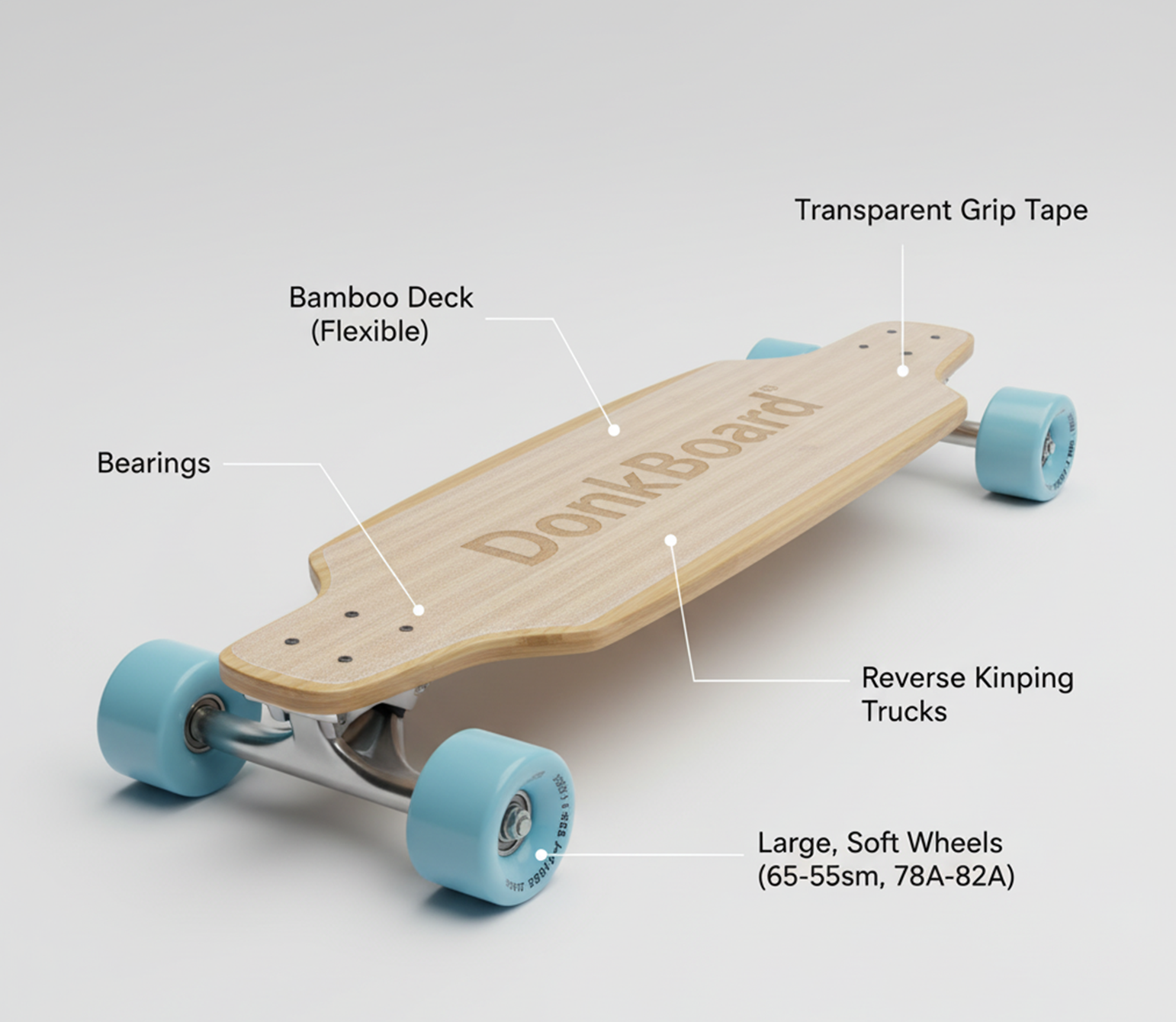
At DonkBoard, we understand that sustainability shouldn’t compromise performance. Our bamboo longboards are engineered using hybrid construction that combines the best characteristics of multiple materials. By strategically layering bamboo with other eco-friendly components, we create decks offering customized flex patterns, directional strength, and the durability you demand from a premium longboard.
Our manufacturing process prioritizes environmental responsibility at every step, from sustainably sourced bamboo to water-based adhesives that eliminate toxic VOC emissions. When you ride a DonkBoard bamboo longboard, you’re experiencing the perfect synthesis of cutting-edge engineering and environmental stewardship.
Recycled Materials: Beyond Bamboo Innovation
The Recycled Materials Revolution
While bamboo deserves its reputation as the poster child of sustainable longboarding, it’s not the only eco-friendly material making waves. Forward-thinking brands are exploring innovative applications of recycled materials that transform waste into high-performance skateboard components.
Recycled Plastic Decks: Some manufacturers create decks entirely from recycled plastic bottles and ocean waste. These boards offer excellent moisture resistance and consistent flex while diverting thousands of plastic bottles from landfills and oceans.
Reclaimed Wood Composites: Another approach involves using wood waste from furniture manufacturing and construction. By combining wood fibers with bio-based resins, companies create composite decks that reduce virgin material consumption while maintaining performance.
Hemp Fiber Reinforcement: Hemp, like bamboo, is a rapidly renewable resource with impressive material properties. Some deck manufacturers use hemp fibers as reinforcement layers, adding strength and impact resistance while supporting sustainable agriculture.
Cork Grip Tape: Traditional grip tape is petroleum-based and non-recyclable. Sustainable alternatives made from cork provide excellent traction while being biodegradable at end of life.
Eco-Friendly Wheel Innovation
Wheels represent another opportunity to reduce environmental impact. While traditional skateboard wheels are made from polyurethane—a petroleum-based plastic—innovation is introducing more sustainable alternatives.
Bio-Based Urethane: Some manufacturers experiment with urethane formulations incorporating bio-based polyols derived from vegetable oils rather than petroleum. While still developing, these formulas show promise for reducing wheel production’s carbon footprint.
Recycled Urethane Programs: A few companies have implemented wheel recycling programs, collecting worn-out wheels and reprocessing the urethane for new products. These initiatives represent important steps toward circular economy models in skateboarding.
When selecting good wheels for a skateboard or longboard, consider eco-conscious formulations. While selection is more limited than conventional options, the market expands as riders increasingly prioritize sustainability.
Complete Longboard Skateboard Size Guide
Understanding Deck Dimensions
Choosing the right longboard size is crucial for performance and enjoyment. Let’s break down essential dimensions and how they relate to different riding styles—a comprehensive longboard skateboard size guide.
Deck Length:
- 28-32 inches: Compact cruisers, highly maneuverable for urban environments and short commutes
- 33-42 inches: Mid-range length offering balance of stability and maneuverability, perfect for cruising and commuting
- 43-50 inches: Longer decks providing maximum stability for downhill riding and long-distance pushing
- 50+ inches: Ultra-long decks for specialized disciplines like long-distance pumping
Deck Width:
- 7-8 inches: Narrow decks for quick transitions, favored by street skaters
- 8-10 inches: Standard width accommodating most riders comfortably
- 10+ inches: Wider platforms for larger riders or maximum stability during high-speed runs
Board Shapes and Applications
Different deck shapes serve different purposes in longboarding. Understanding these distinctions helps you select a board optimized for your intended use.
Pintail: Classic surfboard-inspired shape, narrow nose and tail make these boards lightweight and nimble, perfect for carving and cruising. Many bamboo longboards feature pintail shapes complementing the material’s natural flex.
Drop-Through: The drop-through longboard design mounts trucks through the deck rather than underneath, lowering your center of gravity by 1-2 inches. This enhanced stability makes drop-throughs excellent choices for beginners and commuters prioritizing easy pushing and confidence-inspiring handling.
Drop-Deck: These boards feature a lowered standing platform between trucks, combining drop-through stability benefits with aggressive concave that locks in your feet. Drop-decks excel in freeriding and downhill applications.
Top-Mount: Traditional top-mount boards offer maximum leverage for turning, favored by downhill riders and freeriders needing responsive handling. Higher ride height provides more ground clearance for deeper carves.
The Best Longboard for Beginners
If you’re new to longboarding and want to start your journey on an eco-friendly board, certain characteristics make for an ideal beginner setup. The best longboard for beginners combines stability, forgiveness, and versatility—qualities that sustainable materials like bamboo deliver naturally.
Recommended Specifications:
- Length: 36-42 inches provides stability without being unwieldy
- Shape: Drop-through or drop-deck designs lower your center of gravity for easier balance
- Flex: Medium flex absorbs road vibrations and provides forgiving ride while maintaining control
- Width: 9-10 inches offers comfortable foot placement
Why Bamboo Works for Beginners: The natural flex of bamboo longboards creates a more forgiving ride that’s easier on joints and muscles during the learning phase. Vibration dampening reduces fatigue, allowing you to practice longer and build skills faster. Additionally, bamboo’s durability means your first board won’t be destroyed during inevitable beginner tumbles.
DonkBoard Beginner Recommendations: At DonkBoard, we design entry-level bamboo longboards with new riders in mind. Our beginner-friendly models feature stable geometries paired with complete components that eliminate guesswork from your first purchase.
Choosing the Best Wheel Size for Skateboard and Longboard
Understanding Wheel Dimensions
Wheels dramatically influence your riding experience. Choosing appropriate wheels is essential for matching your setup to riding style, terrain, and skill level.
Wheel Diameter: The best wheel size for skateboard and longboard applications varies significantly:
- 50-54mm: Traditional skateboard size, optimized for street skating and technical tricks. Smaller wheels are lighter and accelerate quickly but offer rougher rides on imperfect pavement.
- 55-65mm: Hybrid sizes bridging skateboards and longboards. These wheels work well for cruising, commuting, and skateparks, providing smoother roll than traditional skateboard wheels while remaining relatively lightweight.
- 66-75mm: Classic longboard cruiser sizes. These larger wheels roll smoothly over cracks, pebbles, and rough pavement that would stop smaller wheels. They maintain momentum efficiently, requiring less pushing effort.
- 76mm+: Skateboard big wheel configurations designed for maximum speed and smoothest possible ride. These oversized wheels are ideal for downhill bombing, long-distance pushing, and riders prioritizing comfort and momentum.
Durometer (Hardness): Measured on the A scale:
- 75A-79A: Soft wheels that grip aggressively and absorb vibrations exceptionally well. Ideal for rough surfaces, beginners seeking stability, and cruising.
- 80A-87A: Medium-soft wheels balancing grip and durability. These represent the sweet spot for most longboarding applications.
- 88A-95A: Medium-hard wheels that slide more easily and last longer. Preferred by freeriders enjoying predictable, controlled slides.
- 96A-101A: Hard wheels designed for skateparks and smooth surfaces. They slide easily and are extremely durable but transmit every bump.
Matching Wheels to Riding Style
Cruising and Commuting: For riders using a longboard cruiser to navigate city streets, prioritize comfort and efficiency. Choose larger wheels (65-75mm) with softer durometers (78A-85A). These good wheels for a skateboard used for transportation roll smoothly over urban obstacles while requiring minimal pushing.
Downhill and Freeride: Longboard downhill riding demands specific wheel characteristics. Downhill racers typically prefer larger, harder wheels (72-80mm, 78A-82A) that maintain speed and provide predictable traction. Freeriders who enjoy sliding choose slightly smaller, harder options (65-72mm, 82A-86A).
Dancing and Freestyle: Longboard dancers benefit from lighter, smaller wheels (60-70mm, 78A-83A) that reduce weight for tricks while providing enough grip for traction during footwork.
Beginner Setups: New riders should select forgiving, confidence-inspiring wheels. Larger, softer options (68-72mm, 78A-82A) provide stability, roll over obstacles easily, and grip predictably.
The Different Kinds of Skateboard Wheels
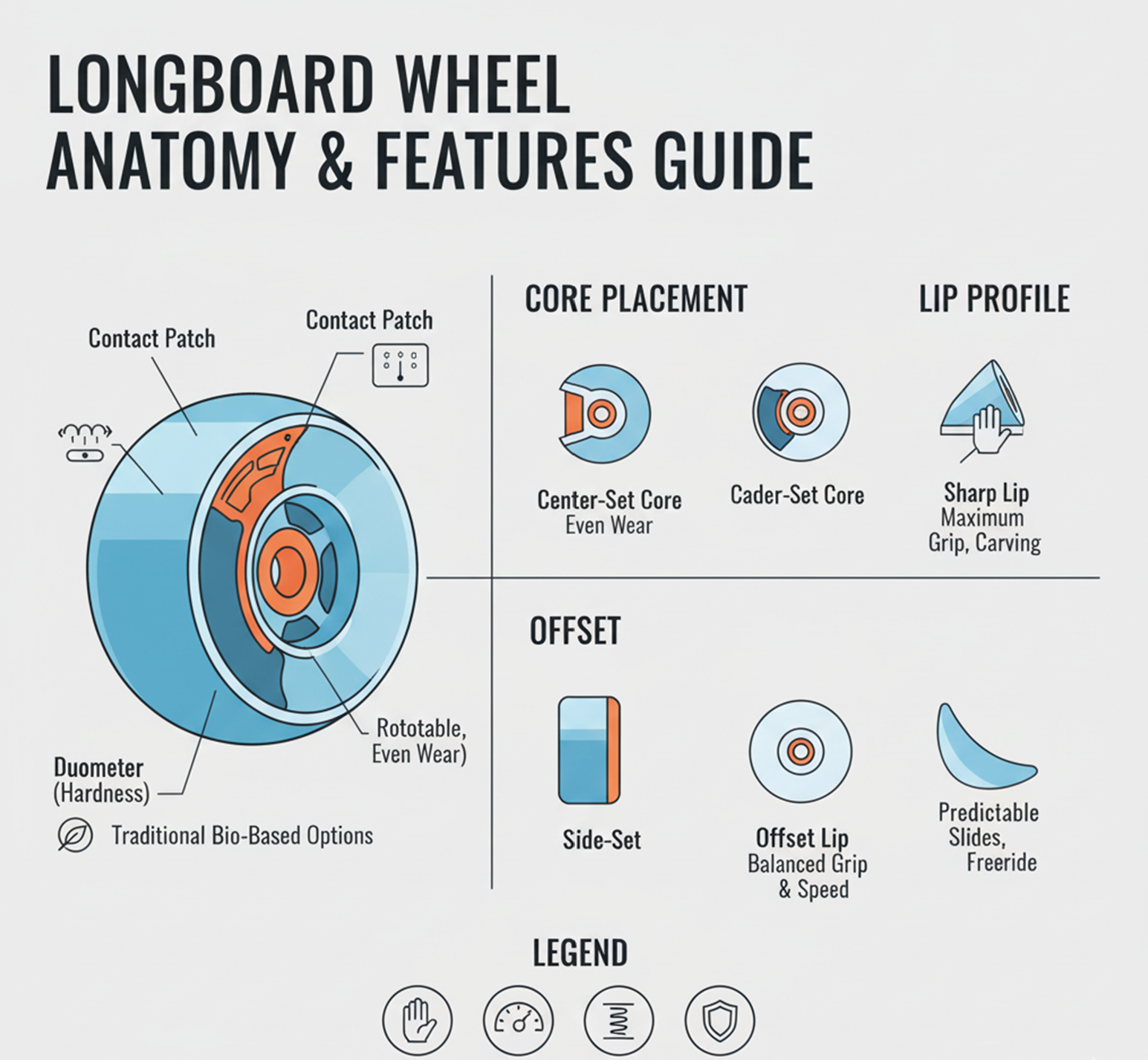
Understanding the different kinds of skateboard wheels available helps you make informed choices. Beyond size and hardness, consider:
Contact Patch: The wheel surface area touching the ground. Wider contact patches provide more grip, while narrower patches slide more easily.
Core Placement: Side-set, center-set, and offset cores affect how wheels wear and perform. Center-set cores allow wheel rotation for even wear, while offset and side-set configurations optimize specific performance characteristics.
Lip Profile: Sharp-lipped wheels grip aggressively, while rounded lips break traction more smoothly for controlled slides.
Eco-Friendly Skateboard Brands Leading the Way
Pioneers of Green Longboarding
The skateboarding industry’s transformation toward sustainability is driven by passionate brands refusing to compromise between performance and environmental responsibility.
DonkBoard: As a premium longboard and skateboard brand, DonkBoard integrates sustainability into our core mission. Our bamboo longboards represent extensive research into materials, construction techniques, and manufacturing processes that minimize environmental impact without sacrificing performance. We believe the best boards are those you can feel good about riding—not just because they perform brilliantly, but because they’re produced responsibly.
Beyond our products, DonkBoard is committed to educating the community about sustainable riding practices, supporting environmental causes, and continuously improving our operations to reduce waste and emissions. When you choose DonkBoard, you’re joining a community that values both progression and preservation.
What to Look for in Eco-Friendly Brands
When evaluating whether a brand genuinely prioritizes sustainability, consider these key factors:
Material Sourcing: Does the company use renewable materials like bamboo, hemp, or sustainably harvested wood? Are materials certified by credible organizations like the Forest Stewardship Council (FSC)?
Manufacturing Processes: Are adhesives formaldehyde-free and water-based? Does production minimize energy consumption and waste? Is manufacturing done domestically or locally to reduce transportation emissions?
Transparency: Does the brand openly communicate about materials, processes, and environmental impact? Authentic sustainable brands provide detailed information about their practices.
Longevity and Repairability: Truly sustainable products are built to last. Does the brand design durable boards that can be repaired rather than replaced?
Community Engagement: Is the company involved in environmental causes, education, and activism? Do they support conservation organizations or organize community cleanup events?
Building Your Complete Sustainable Setup
Beyond the Deck: Eco-Conscious Components
Creating a fully sustainable longboard setup extends beyond choosing an eco-friendly deck. Let’s examine components and accessories that complete your board.
Trucks: These metal components are inherently more sustainable than plastic parts because they’re fully recyclable at end of life. Choose quality trucks from manufacturers using recycled metals and responsible manufacturing. Premium trucks can last through multiple deck changes, reducing waste.
Bearings: Look for bearings from companies using recycled steel and biodegradable or synthetic lubricants that reduce environmental harm. Proper maintenance extends bearing life significantly.
Grip Tape: Sustainable alternatives include cork-based grip tape, recycled rubber options, and products made with bio-based adhesives. These alternatives provide excellent traction while being biodegradable.
Hardware: Choose hardware (bolts and nuts) made from recycled metals. Stainless steel options resist corrosion better, lasting longer and reducing replacement frequency.
Safety Gear: Helmets, pads, and protective equipment represent necessary investments. Choose durable, high-quality gear that will last years rather than cheap alternatives needing frequent replacement.
Maintenance for Longevity
Sustainable longboarding includes maximizing equipment lifespan through proper care and maintenance.
Cleaning Your Deck: Regularly clean your bamboo longboard with a damp cloth to remove dirt and grime. Avoid soaking the deck or using excessive water. For stubborn stains, use mild, biodegradable soap.
Protecting the Finish: Most bamboo decks feature protective clear coats shielding bamboo from moisture and UV damage. Inspect this finish regularly for chips or scratches. Touch up small damage with clear, water-based wood sealers.
Storage: Store your longboard in a climate-controlled environment when possible. Extreme temperature fluctuations and humidity changes can stress bamboo and adhesives. Don’t leave your board in hot cars or exposed to direct sunlight for extended periods.
Wheel Rotation: Every 60-100 miles, rotate your wheels to distribute wear evenly. This simple maintenance can double your wheel lifespan.
Bearing Care: Every 3-6 months, remove your bearings and clean them thoroughly. Use bearing cleaning solution, citrus-based degreaser, or isopropyl alcohol. After cleaning and drying completely, apply minimal skateboard-specific bearing lubricant.
Essential Tips for Beginners
Getting Started Safely
Beginning your longboarding adventure correctly sets the foundation for years of enjoyment. These essential tips will help you progress safely and confidently.
Master the Basics: Before attempting tricks or high speeds, focus on fundamentals. Practice your stance (regular or goofy), work on pushing efficiently, and develop comfortable stopping techniques.
Choose the Right Environment: Start in safe, controlled spaces—empty parking lots, quiet residential streets, or dedicated skate areas. Smooth, flat pavement is ideal. Avoid hills, crowded areas, and rough surfaces until you’ve developed basic proficiency.
Invest in Safety Equipment: A quality helmet is non-negotiable, even for casual cruising. Wrist guards, knee pads, and elbow pads provide additional protection during the learning phase when falls are most common.
Learn Proper Falling Techniques: Falling is inevitable when learning. Practice rolling when you fall rather than catching yourself with outstretched hands. Bend your knees and distribute impact across your body.
Start with Appropriate Equipment: The best longboard for beginners features stability-enhancing characteristics like a drop-through deck, medium flex, and softer, larger wheels creating a forgiving platform that builds confidence.
Progressing Your Skills
As you advance beyond basic cruising, your bamboo longboard will continue serving you well across various riding disciplines.
Carving and Pumping: These fundamental techniques allow you to generate and maintain speed without pushing. The natural flex of bamboo longboards makes them particularly suited to carving, as the deck loads and releases energy through each turn.
Sliding and Braking: Learning to control your speed through slides is essential for safely descending hills. Start with glove-down slides on gentle gradients, gradually progressing to stand-up techniques.
Distance Pushing: For commuters and fitness riders, efficient long-distance pushing is crucial. Focus on technique—pushing with full leg extension, maintaining momentum through rhythm, and switching pushing legs to prevent fatigue.
Common Beginner Mistakes to Avoid
Choosing the Wrong Size Board: Don’t select a board based solely on aesthetics. Use a proper longboard skateboard size guide to match dimensions to your height, weight, and intended use.
Neglecting Safety Gear: The confidence from wearing protective equipment actually accelerates learning by reducing fear of consequences.
Tensing Up: Rigid, tense riding creates instability and fatigue. Stay relaxed, bend your knees, and let your body move naturally with the board.
Looking Down: Keep your head up and eyes forward. Your body naturally follows where your eyes focus.
Progressing Too Quickly: Build skills progressively. Master flat-ground cruising before attempting hills. Patience prevents injuries and equipment damage.
The Longboarding Lifestyle: Community and Culture
More Than Transportation
The longboarding lifestyle transcends simply riding a board. It’s a vibrant subculture celebrating creativity, freedom, environmental consciousness, and authentic human connection.
The Commuter Revolution: Across cities worldwide, riders are replacing short car trips with longboard commutes. This isn’t just about saving money—it’s about reclaiming your daily routine. Your commute transforms from dead time in traffic to an energizing experience connecting you with your environment. The longboard cruiser has become the vehicle of choice for urban sustainability warriors.
Adventure and Exploration: Longboarding opens new ways to experience familiar places. Routes that seem mundane in a car become exciting adventures on a board. You notice architectural details, discover hidden alleys, and connect with your community in ways impossible from behind a windshield.
Health and Wellness: The physical benefits of regular longboarding are substantial. Pushing provides excellent cardiovascular exercise while building leg strength and core stability. Balance requirements enhance proprioception and coordination.
Mental Health Benefits: The meditative quality of longboarding shouldn’t be underestimated. The rhythmic motion of pushing, focus required for balance, and endorphin release from physical activity combine to reduce stress and anxiety.
Creative Expression: From deck graphics to riding style, longboarding offers endless opportunities for self-expression. Your board becomes an extension of your personality and values.
Building Community
The longboarding community is remarkably inclusive and supportive. Unlike some action sports cultures, longboarding welcomes riders of all ages, genders, backgrounds, and skill levels.
Local Skate Crews: Most cities have longboarding communities that organize group rides, skill shares, and social events. These gatherings provide opportunities to learn from experienced riders, discover new spots, and build friendships.
Online Communities: Social media platforms and specialized forums host vibrant longboarding communities where riders share videos, tips, and encouragement. These digital spaces connect the global longboarding family.
Environmental Advocacy: The longboarding community increasingly recognizes its role as environmental steward. Riders are often early adopters of sustainable practices, and the community is moving toward greater environmental consciousness.
Car-Free Advocacy: Many longboarders actively promote car-free lifestyles and alternative transportation. By demonstrating that meaningful distances can be covered on a board, riders challenge car-centric urban planning.
Trail Maintenance: Longboarding communities frequently organize cleanup events, maintaining trails, paths, and roads where they ride. These efforts include trail restoration, graffiti removal, and habitat protection.
The Future of Sustainable Longboarding
Emerging Technologies
The sustainable longboard industry continues evolving rapidly, with innovative manufacturers exploring cutting-edge materials and construction techniques.
Advanced Bio-Composites: Researchers are developing composite materials combining natural fibers (bamboo, hemp, flax) with bio-based resins derived from plant oils rather than petroleum. These materials promise performance rivaling or exceeding traditional composites while being significantly more sustainable.
Recycled Carbon Fiber: New recycling technologies are making it possible to reclaim carbon fiber from aerospace and automotive waste, creating sustainable access to this high-performance material.
3D Printing Applications: Additive manufacturing technologies are enabling small-scale, localized production of longboard components with minimal waste. As 3D printing materials become more sustainable, this technology could transform how boards are manufactured.
Wheel Innovation: The ongoing development of bio-based polyurethane formulations and natural rubber compounds promises wheels rivaling petroleum-based urethane performance while dramatically reducing environmental impact.
The Circular Economy
Forward-thinking brands are exploring circular economy models where products are designed from conception for eventual disassembly, recycling, or composting rather than disposal.
Take-Back Programs: Some manufacturers now offer programs where customers can return worn-out boards for recycling or responsible disposal. Materials are reclaimed and reprocessed into new products.
Modular Design: Future longboards may feature modular construction allowing easy component replacement and upgrades without discarding entire assemblies. This approach maximizes product lifespan and reduces waste.
Industry Standards
As sustainable longboarding grows from niche to mainstream, industry organizations are developing standards and certifications helping consumers identify genuinely eco-friendly products versus greenwashing.
Material Certifications: Look for certifications from organizations like the Forest Stewardship Council (FSC) for wood products, confirming sustainable forestry practices.
Carbon Neutral Operations: More brands are measuring their carbon footprints and implementing offset programs or operational changes to achieve carbon neutrality, driving industry-wide improvements.
Conclusion: Roll Into a Sustainable Future with DonkBoard
The journey toward sustainable longboarding isn’t about perfection—it’s about progress. Every bamboo longboard that replaces a traditional deck, every car trip replaced by a cruise to work, every rider who chooses eco-friendly equipment makes a difference. Collectively, these individual choices create movements that transform industries and protect the planet.
Sustainable longboarding offers the best of all worlds: the freedom and joy of riding, satisfaction of physical activity and outdoor adventure, connection with a vibrant community, and knowledge that your passion aligns with your values. When you choose a bamboo longboard from DonkBoard, you’re not compromising—you’re accessing superior materials that enhance your riding experience while demonstrating commitment to environmental responsibility.
Whether you’re seeking the best longboard for beginners, upgrading to sustainable alternatives, or building a specialized board for downhill or distance pushing, eco-friendly options now exist for every discipline and skill level. From skateboard big wheel configurations that smooth out rough urban pavement to perfectly sized wheels for your terrain, from comprehensive longboard skateboard size guides to detailed information on different kinds of skateboard wheels, you now have all the knowledge needed to make informed, environmentally conscious choices.
Your Next Steps: Join the DonkBoard Community
Ready to experience the perfect intersection of performance and sustainability? Here’s how to begin:
Explore Our Bamboo Collection: Visit the DonkBoard website to browse our complete range of sustainable longboards. From beginner-friendly cruisers to advanced freeride and downhill designs, we offer bamboo longboards engineered for every riding style and skill level.
Get Expert Guidance: Unsure which board suits your needs? Our team of passionate riders provides personalized recommendations based on your size, skill level, terrain, and riding goals. Contact us through our website—we’re here to help.
Join Our Community: Follow DonkBoard on social media to connect with riders worldwide, share your progression, discover new spots, and participate in contests and giveaways. Tag your rides with #DonkBoardLife to be featured and inspire others.
Start Your Sustainable Journey Today: Browse our collection of bamboo longboards, complete setups, and eco-friendly accessories. Every purchase supports sustainable manufacturing practices and demonstrates your commitment to both progression and preservation.
Subscribe for Updates: Sign up for our newsletter to receive exclusive discounts, early access to new products, maintenance tips, riding tutorials, and stories from the DonkBoard community.
The Road Ahead
The future of longboarding is sustainable, inclusive, and more exciting than ever. Innovations in materials science, manufacturing processes, and community consciousness are creating better boards that protect the environment we love to ride through. As you roll into this future, know that every push, every carve, every session is part of something larger—a movement toward mindful enjoyment of our passion.
The pavement is calling. The trails are waiting. Your sustainable adventure begins now.
Visit DonkBoard.com today to explore our complete range of premium bamboo longboards, find your perfect eco-friendly setup, and join a community of riders who believe the best ride is one that’s good for you and the planet.
Ride sustainable. Ride DonkBoard.
About DonkBoard: As a premium longboard and skateboard brand, DonkBoard is committed to crafting high-performance boards that don’t compromise environmental responsibility. Our bamboo longboards combine cutting-edge design with sustainable materials, creating equipment that serves both riders and the planet. From the best longboard for beginners to advanced specialized designs, every DonkBoard represents our dedication to quality, innovation, and environmental stewardship. Join us in rolling toward a more sustainable future.